
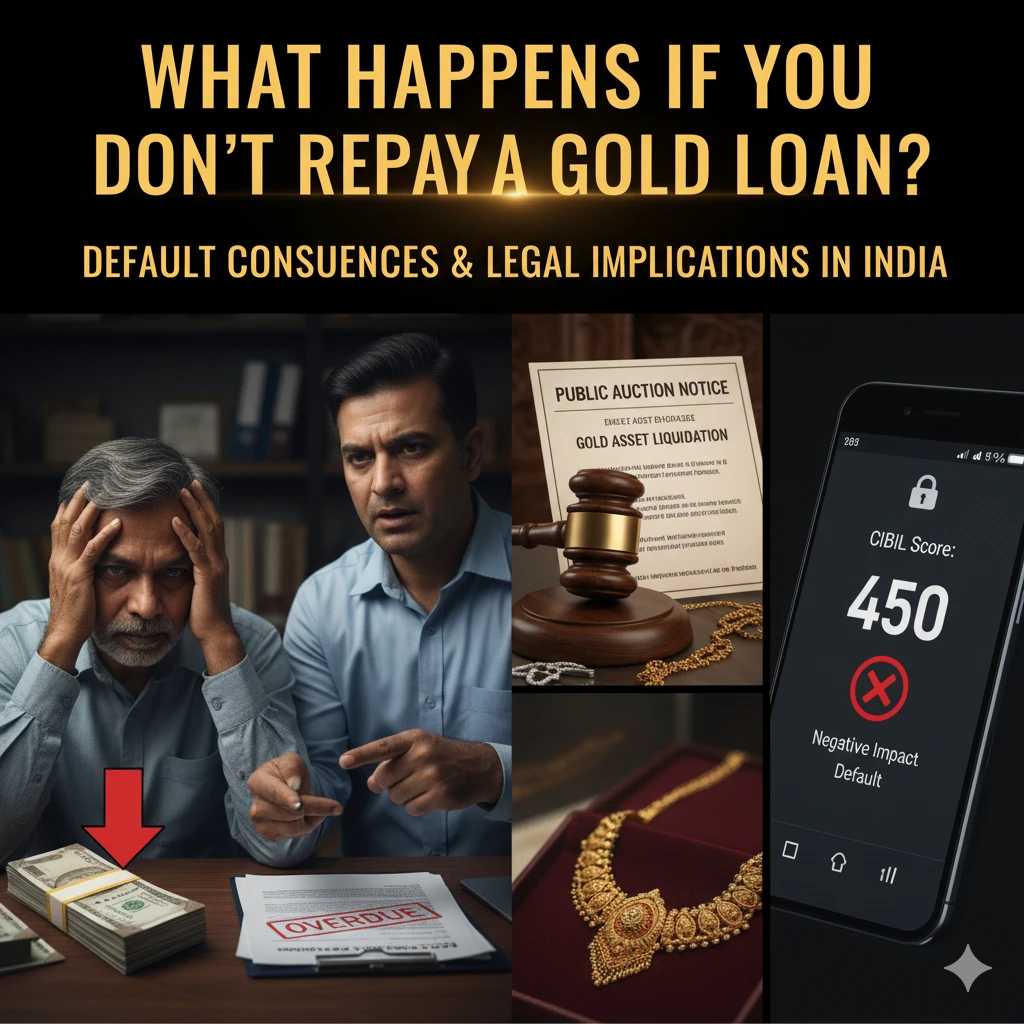
Gold loans are one of the most popular forms of secured lending in India. They allow borrowers to pledge their gold jewellery or coins and get instant cash at relatively low interest rates. With minimal paperwork and quick disbursal, gold loans have become a lifeline for many Indians during emergencies, business needs, or personal expenses.
However, a critical question arises: What happens if you don't repay a gold loan? Understanding the consequences is essential to avoid financial and legal trouble.
1. How Gold Loans Work
Gold loans are secured loans, meaning the borrower pledges gold as collateral. Key features include:
- Loan Amount: Typically 60–75% of the gold's market value.
- Interest Rate: Lower than unsecured loans; varies from 7–15% per annum.
- Repayment Tenure: Usually 3–36 months, depending on the lender.
- Security: Gold jewellery, coins, or bars are stored in the lender's vault.
The lender holds the gold until the loan, along with principal and interest, is fully repaid.
2. Consequences of Defaulting on a Gold Loan
Failing to repay a gold loan can have serious financial, legal, and credit-related consequences.
A. Pledging Gold is at Risk
Since the loan is secured by your gold, defaulting gives the lender the right to auction your pledged gold to recover the dues.
Process:
- The lender sends a reminder or notice about the overdue loan.
- If the borrower fails to repay within the stipulated grace period, the lender may auction the gold publicly or privately.
- Proceeds from the auction first cover the principal, interest, and any charges.
- Any surplus after settlement is returned to the borrower; if the auction proceeds are insufficient, the borrower remains liable.
B. Impact on Credit Score
Non-repayment of gold loans is reported to credit bureaus like CIBIL, Experian, or Equifax. Consequences include:
- Lower CIBIL score, affecting your ability to take loans in the future.
- Difficulty in getting personal, home, or auto loans.
- Higher interest rates for future loans due to perceived credit risk.
C. Legal Action
While most lenders prefer to auction the pledged gold, persistent defaults may result in legal proceedings.
- Lenders may file a claim in civil court to recover dues.
- Court proceedings can add legal costs and interest to your liability.
D. Additional Penalties and Charges
Some lenders may impose penal interest or late payment charges on overdue loans, further increasing the repayment burden.
3. How to Avoid Default
Borrowers can take several steps to avoid defaulting on a gold loan:
- Borrow Only What You Can Repay: Take a loan amount within your repayment capacity.
- Understand the Tenure and Interest: Choose a repayment tenure that aligns with your income flow.
- Pay Interest on Time: Even if you cannot repay the principal immediately, paying interest prevents penalties and reduces loan escalation.
- Top-Up or Renew Carefully: Some lenders allow loan renewal or top-up, but ensure you can service additional debt.
- Consider Alternatives: If repayment is difficult, explore options like personal loans, peer-to-peer loans, or family support to avoid default.
4. Rights of the Borrower
While lenders have the right to auction gold in case of default, borrowers also have rights:
- Notice Period: Lenders are required to provide a formal notice of default and a reasonable grace period.
- Auction Fairness: Auctions must follow transparent procedures, and the borrower can attend the sale or get updates.
- Surplus Amount: Any amount left after settling dues must be returned to the borrower.
Being aware of your rights can help prevent unfair practices by lenders.
5. Tips for Responsible Gold Loan Borrowing
- Check Lender Credibility: Choose banks or NBFCs registered with RBI.
- Keep Documentation: Maintain loan agreements, interest statements, and receipts.
- Plan for Contingencies: Have a repayment strategy even if income fluctuates.
- Avoid Multiple Loans: Multiple gold loans on different holdings increase default risk.
Need Help with Gold Loan or Selling Gold?
Get expert advice on gold loans, repayment options, or selling gold safely. Contact AuFluence for personalized guidance.
Get Expert Help6. Conclusion
Gold loans offer quick liquidity at low interest rates, making them a preferred choice for many Indians. However, failure to repay can result in:
- Loss of pledged gold through auction
- Damage to credit score and borrowing ability
- Legal and financial penalties
By understanding the risks, repayment options, and borrower rights, you can use gold loans responsibly and avoid default. Borrow only within your means, maintain clear communication with your lender, and ensure timely repayment to protect both your gold and financial reputation.