
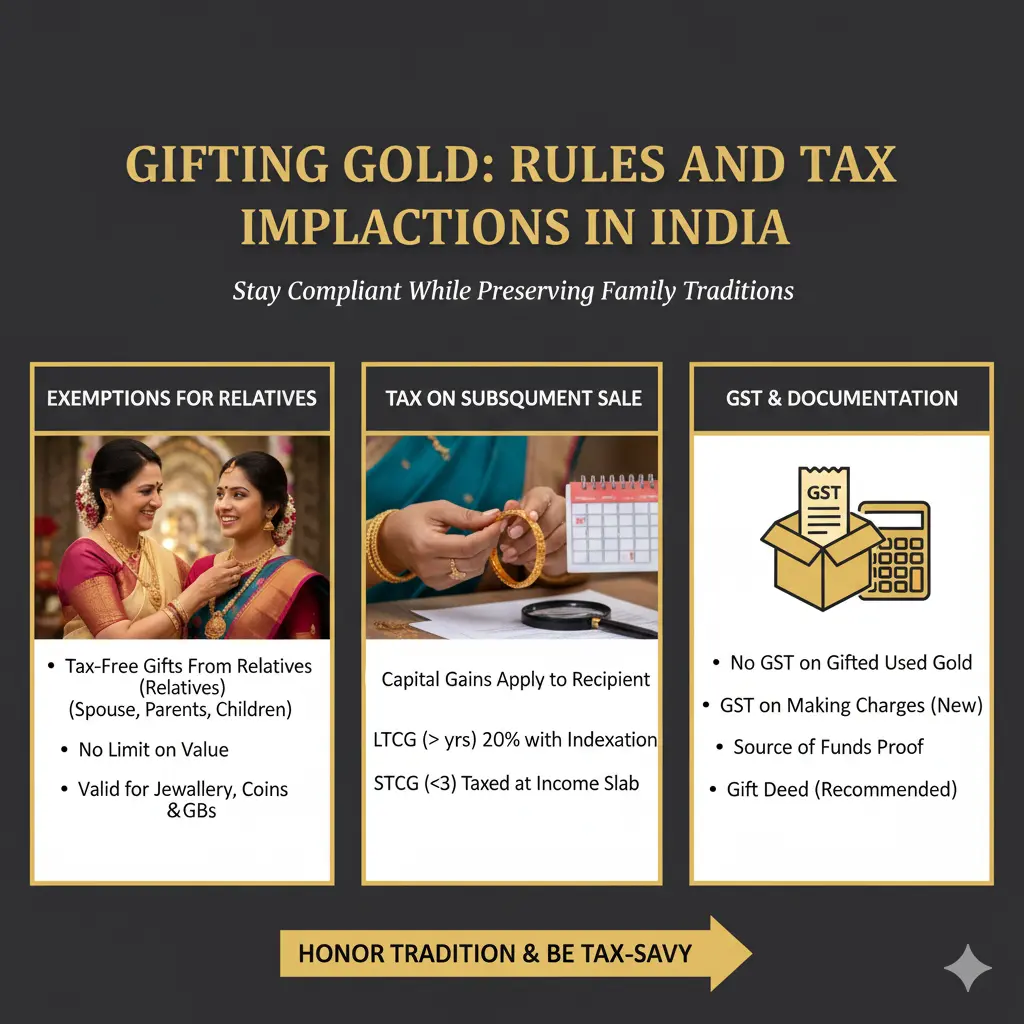
In India, gifting gold is more than just a gesture-it is a tradition rooted in culture, family values, and wealth preservation. Be it weddings, festivals like Diwali and Akshaya Tritiya, or milestones like birthdays and anniversaries, gold remains the most cherished gift. However, while gifting or receiving gold has emotional and cultural value, it also comes with certain rules and tax implications that many people are unaware of.
If you are planning to gift gold or have received gold as a gift, here's everything you need to know about the laws, income tax rules, and exemptions in India.
Why Gold is a Popular Gift in India
- Cultural Significance – Gold is considered auspicious and symbolizes wealth, prosperity, and good fortune.
- Wealth Preservation – Unlike many gifts, gold retains or appreciates in value over time.
- Liquidity – It can be sold or pledged easily during emergencies.
- Intergenerational Transfer – Gold jewellery and coins are often passed down as heirlooms, preserving family heritage.
Rules for Gifting Gold in India
While there is no specific restriction on gifting gold, certain points must be kept in mind:
- No Limit on Gifting: There is no legal cap on how much gold you can gift or receive.
- Documenting the Gift: It is advisable to keep documentation, such as a gift deed, receipt, or declaration, especially for large transactions. This helps in case of any inquiry from the Income Tax Department.
- Purity and Hallmarking: Always buy hallmarked gold jewellery or coins to ensure authenticity and better resale value.
Tax Implications of Gifting Gold
The taxation depends on who is giving the gift, who is receiving it, and the value of the gift.
1. Gifts from Relatives
According to Indian tax laws, if you receive gold from a specified relative, it is completely tax-free, regardless of the amount or value.
Who qualifies as a relative?
- Parents
- Siblings (brother/sister)
- Spouse
- Children (and their spouses)
- Grandparents and grandchildren
👉 Example: If a father gifts his daughter gold worth ₹5 lakh on her wedding, it is tax-free.
2. Gifts from Non-Relatives
If you receive gold from a non-relative, it may attract tax:
- If the total value of gold (or other gifts) received in a financial year exceeds ₹50,000, it is treated as "Income from Other Sources" and taxed as per your income slab.
- If the value is less than ₹50,000, it is tax-free.
👉 Example: If a friend gifts you gold worth ₹70,000, the entire ₹70,000 becomes taxable.
3. Gifts on Special Occasions
Gifts received on the occasion of marriage are fully exempt from tax, even if they exceed ₹50,000. However, gifts received on birthdays, anniversaries, or festivals like Diwali do not qualify for this exemption.
👉 Example: If you receive gold jewellery worth ₹10 lakh at your wedding from multiple guests, it is completely tax-free.
Selling Gifted Gold – Capital Gains Tax
Another important aspect to consider is the sale of gifted gold. Even if you received the gold as a gift without paying tax initially, you may have to pay tax when you sell it later.
- Short-Term Capital Gains (STCG): If you sell gold within 3 years of receiving it, any profit is added to your income and taxed as per your slab.
- Long-Term Capital Gains (LTCG): If you sell it after 3 years, the profit is taxed at 20% with indexation benefit (which adjusts purchase cost for inflation).
👉 Example: If your uncle gifts you gold worth ₹2 lakh, and you sell it 5 years later for ₹3 lakh, the ₹1 lakh profit will be taxed under LTCG after indexation.
GST on Gold Gifts
While gifting gold within family or socially does not attract GST, buying new gold jewellery or coins to gift someone includes 3% GST at the time of purchase. This is usually paid by the buyer (giver of the gift).
Tips to Stay Compliant and Save Tax
- Maintain Bills and Receipts – Always keep proof of purchase and gifting to avoid scrutiny.
- Gift Deed for High-Value Gold – Drafting a simple notarized gift deed helps establish clarity in ownership.
- Plan Gifts Smartly – If gifting outside relatives, keep the value below ₹50,000 in a year to avoid tax liability.
- Use Gold Bonds or Digital Gold – For hassle-free documentation and safer transfers.
Expert Gold Valuation & Tax Guidance
Get professional advice on gold gifting, taxation, and valuation. Contact AuFluence for compliant and transparent gold transactions.
Get Expert ConsultationConclusion
Gifting gold in India is both a traditional practice and a financial strategy. While the cultural value of gold as a symbol of prosperity cannot be ignored, it is equally important to understand the rules and tax implications associated with it.
- Gifts from relatives and on weddings are fully exempt.
- Gifts above ₹50,000 from non-relatives may be taxed.
- Sale of gifted gold can attract capital gains tax.
By staying aware of these rules, you can ensure that your gold gifting is not just auspicious but also compliant with Indian tax laws.